
How to Find an Emery County Property Owner
Finding an owner takes three steps. Start with any location clue. Turn it into a parcel. Then read the tax-roll Primary Name and chase that name to the newest deed. Each Emery County source does one job well. The tax roll ties a name to an account, the Recorder's filed instrument proves a transfer, and a GIS map shows where the parcel sits. Emery County publishes no fixed tax-roll update lag, so a fresh sale can show up in the deed record before the tax row catches up.
- Locate the property by address or map and copy the full parcel serial.
- Read the tax-roll Primary Name, Property Address, and Address 1 as separate fields.
- Ask the Recorder for the latest instrument affecting the same legal description.
- If the name is a company, check Utah's business entity record for context.
- Use the mailing field only for a lawful property-related contact, not as a residence claim.
Emery County Tax-Roll Owner Names
The Treasurer's table is the clearest owner clue the county publishes. Primary Name sits beside the parcel serial, Property Address, Address 1, city, state, ZIP, a plat link, a master TaxRoll link, and annual notices. It is a static table. No search box appears there. The page offers no by-street lookup, owner-name filter, or export tools, and it publishes no result limit either.
One sample row, parcel 01-0001-0011, lists JOHANSEN, CRAIG E TRUSTEE with a Castle Dale situs and a PO Box mailing address. That tells you whose name is on the tax account. It does not reveal trust beneficiaries or prove who lives at the site. Copy the exact name and parcel number before requesting the deed or a detailed tax record. The Emery County Treasurer tax roll pairs the parcel and name fields in one view.
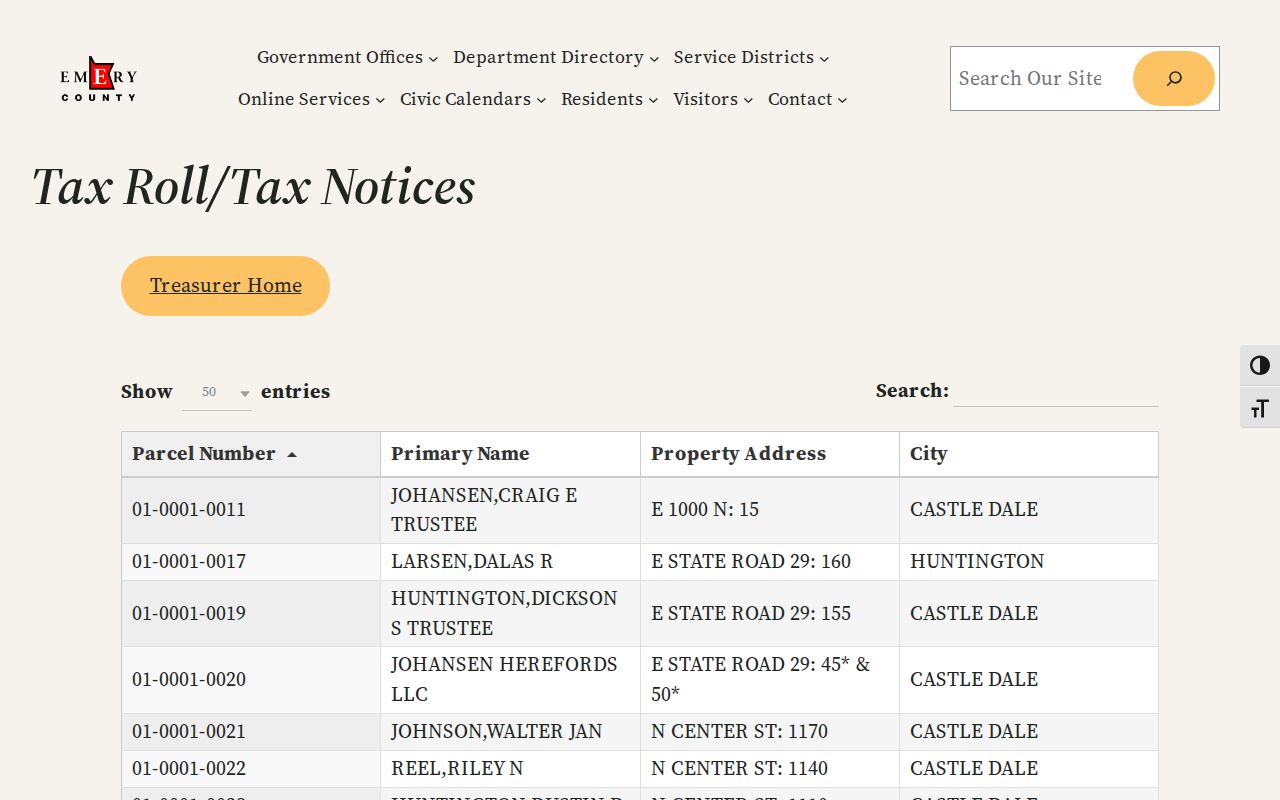
Start with the tax roll row. It shows the parcel number and the owner of record. Take those details to the Emery County Recorder to confirm the deed.
From Emery County Address to Parcel
Street addresses run thin in a rural county. Some Emery County tax-roll rows give only a road-and-distance description. The notice mailing address may be a PO Box in another city. The Recorder's location map accepts an approximate place, a city or town, or a section-township-range reference. Its direct plat directory takes a parcel ID. Locate the tract first. Then carry the complete serial to the tax roll and the Recorder.
The GIS "Land Owner Info" experience runs on JavaScript. So not every search field appears in the text page. If an address returns no parcel, zoom to the area or contact IS/GIS. Treat the screen as orientation only. The recorded plat is the authority for platted lot and block details. The deed supplies the conveyance instrument. The Emery County location map is the approximate-location route.
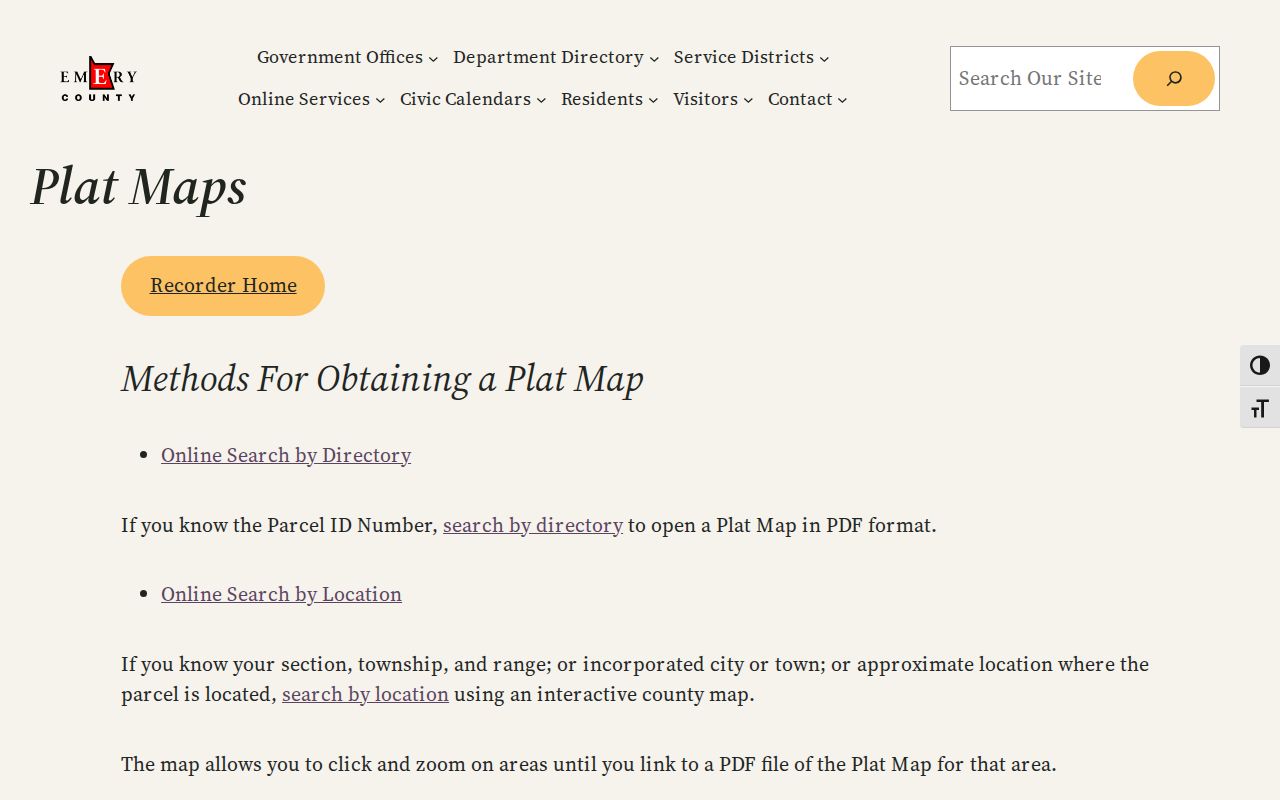
The plat helps stabilize a location before a party-name request.
Where Emery County Owner Information Comes From
Emery County scatters ownership clues across several records, each covering a different angle. The tax roll carries a Primary Name plus mailing fields. A recorded deed filed with the Recorder names the grantee of a specific instrument. GIS and the plat identify the land itself. A map is never a title opinion, though. Utah's entity search can help decode a business name. No single record answers every version of who owns this property in Emery County on its own.
| Source | Owner Info It Gives | Access |
|---|---|---|
| Treasurer tax roll | Primary Name, situs, mailing address, and parcel links | Public table; not a documented owner-search form |
| Recorder instrument | Parties and legal description in a filed transfer | Ask the office which index or book applies |
| Utah entity search | Business name, principals, and registered-agent context | State Registered Entities Search |
| GIS and plat | Parcel location and mapped description | Interactive map and plat directory |
Owner of record means the party named in one particular record. That is all it means. It is not the occupant, the beneficiary, the manager, or whoever collects the mail. An LLC's registered agent is a listed business contact. A trustee label never reveals the trust's beneficiaries. Keep the land question anchored to a deed and its legal description in Emery County.
Emery County Trusts, LLCs, and Estates
An Emery County tax row will sometimes list a trust, trustee, LLC, city, or county. It may do so instead of naming a person. Copy the Primary Name string exactly as it appears. A business name can be checked through Utah's Registered Entities Search. That tool accepts a partial name and entity type. It may show principals or agents for context. Still, the Recorder's deed remains the source for land transfer. A trust hides its beneficiaries in the tax row. A registry entry proves nothing about title to a particular parcel.
Estate property may have moved through probate authority, a personal-representative deed, or another recorded instrument. Utah Courts Xchange may show a case summary or letters of appointment. It is not the full probate file. Match the court authority against the Recorder instrument and legal description. Do that before deciding an heir or entity owns the tract. The Utah Registered Entities Search is the handiest tool for entity context in Emery County.
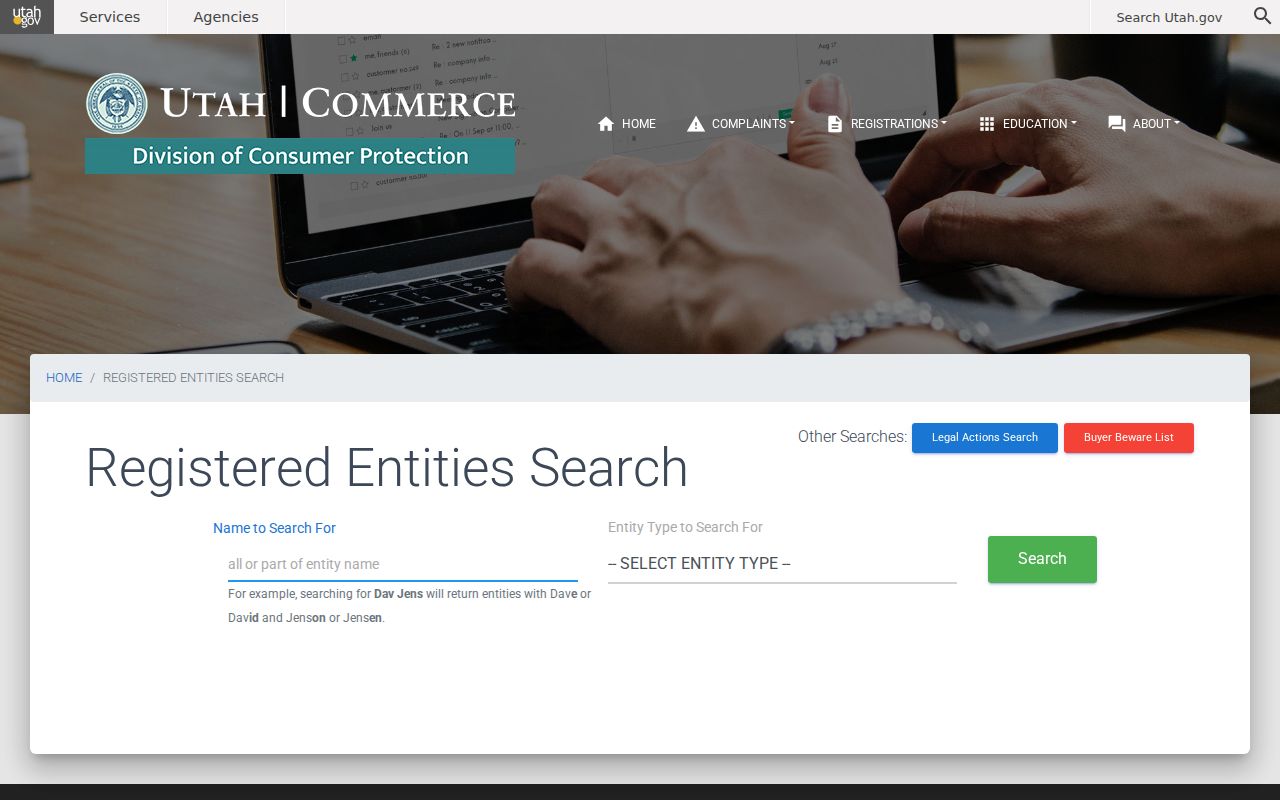
Come back from the entity search to the deed and parcel, so the answer stays tied to the land in Emery County.
Requesting an Emery County Ownership Record
The Recorder publishes no online grantor-grantee index. Requests go by phone at (435) 381-3520, by email at recorder@emery.utah.gov, or in person at 75 East Main Street in Castle Dale. Office hours run 8:30 a.m. to 5 p.m. on weekdays, minus county holidays. Have the details ready. Provide the parcel, the parties, the legal description, and the likely date range. Staff can walk you through the public index or a copy request. They will not perform a title search or legal research over the phone.
Anything not posted online can still be obtained. Send a narrow GRAMA request to whichever office holds the record. Name the parcel and the document you want. Ask for electronic delivery or inspection, and request a fee estimate. A standard response is generally due within 10 business days. Qualifying public-interest requests carry a five-business-day path. Remember that tax, permit, court, and land records may sit with different custodians. Route each request to the right office.
For the current roll entry, see Emery County current owner records. It also covers its update limits.
Emery County Property Records Stay County-Held
A property's mailing label can carry a city name. It does not move its records to city hall. The deed, tax bill, and parcel file stay with Emery County. Its Recorder, Assessor, Treasurer, and GIS offices handle land records countywide. A municipality may hold zoning letters, local ordinances, annexation minutes, or permit material. For a city-limit property, the city zoning representative supplies a signed letter. That letter comes before the county building-permit process. An unincorporated site follows county Building & Zoning requirements instead.
This split explains a common confusion. A city office handles the permit question. The county office handles the deed or assessed value. The county keeps zoning maps for each city. It warns the map is for viewing only. Verify city limits with the municipal office and recorded annexation documents where the boundary matters.
What an Emery County Owner Lookup Cannot Tell You
A tax-roll owner label has real limits. It does not say who occupies the property, who benefits from a trust, or whether an unrecorded interest exists. It can also lag a recently filed deed. An interval for that lag has not been published by the county. GIS lines are not title and not a surveyed boundary.
Utah's Safe at Home program gives eligible protected participants substitute addresses. Court records may be sealed or restricted. Respect those limits when using public records.
Lawful use. An Emery County owner lookup is for property research, due diligence, and civic purposes. Do not use an owner name or address to stalk, harass, threaten, or harm anyone, and do not treat a public account as proof of a person's home or identity.