
What Emery County Deed Records Can Show
The Emery County Recorder records and retrieves land documents. The office keeps cross-reference indexes. It also helps with ownership plats and sells copies and certifications. A deed is simply the instrument that records a transfer. The same office also records mortgages, releases, liens, easements, rights-of-way, plats, and related property records. These items sit side by side in a parcel's history. A mortgage or lien, though, is not a deed. Neither one transfers ownership. The Emery County Recorder's office page is the county's own source for these land-document services. It also covers their public-access limits.
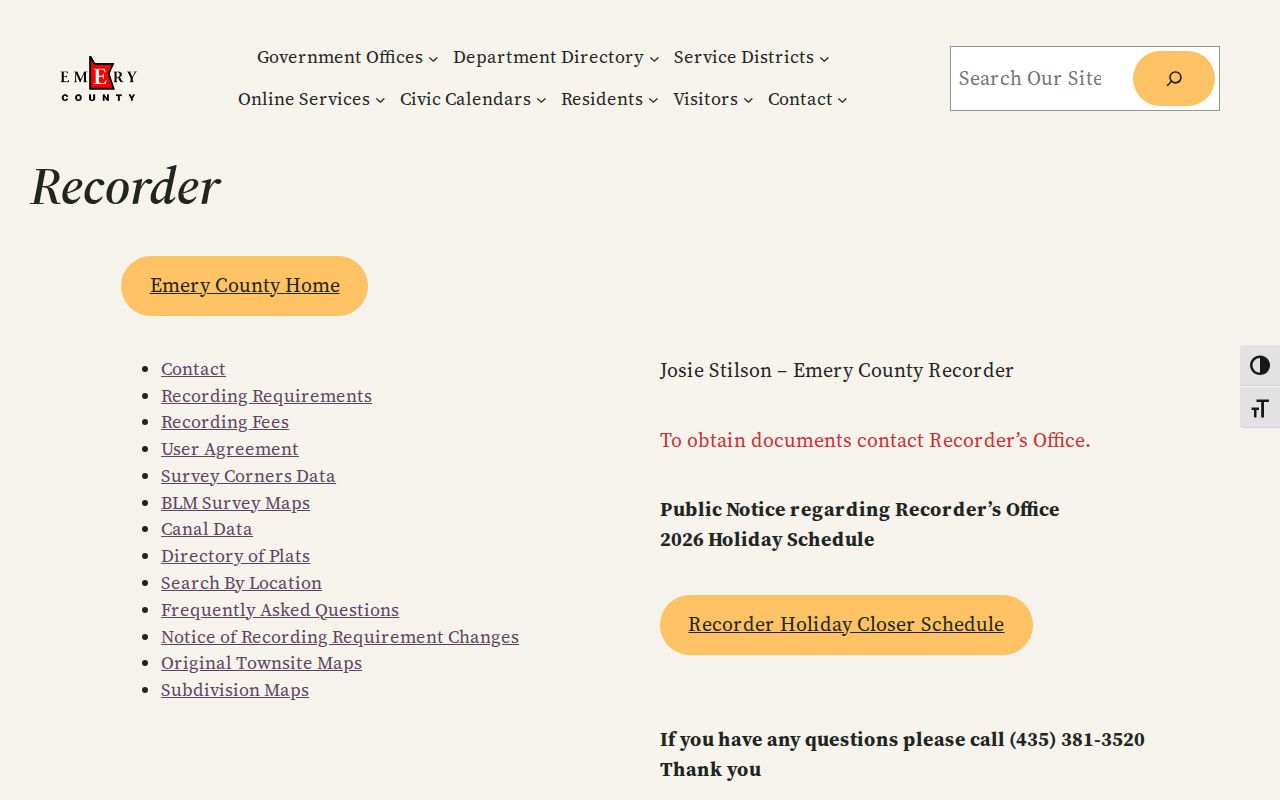
The Recorder publishes routes for identifying an instrument and requesting a copy. The office itself does not perform a title search, so the legwork of tracing ownership stays with you.
| Deed Type | What It Does | Common Use |
|---|---|---|
| Transfer deed | Records the conveyance and legal description stated in the instrument | Confirming a change from grantor to grantee |
| Personal-representative deed | May convey estate property under the recorded authority | Checking a probate-related transfer with the court file |
| Tax-sale conveyance | May follow a county tax-sale process and its legal steps | Verifying a distressed-property transfer after status checks |
| Mortgage or deed of trust | Records a secured obligation affecting land | Reviewing an encumbrance and later release |
| Release or satisfaction | Records a later action on a prior obligation | Checking whether a recorded claim was cleared |
| Easement or right-of-way | Records a land-use interest or access route | Reviewing how an instrument affects a tract |
Party names alone won't carry a deed request. The legal description matters just as much. One filed document can affect several parcels. It can include an easement, or carry a lot-and-block description that must be read against the correct plat. The Recorder states plainly that it does not perform title searches. It also will not prepare legal documents, interpret them, or give legal descriptions over the phone. A recorded copy is evidence of what was filed, nothing more. It is not a complete title opinion, and treating it as one invites trouble.
Emery County Grantor and Grantee Coverage
The grantor transfers an interest. The grantee receives it. To trace a deed chain, take the grantee on a deed, use that name to find the party's earlier acquisition, and work back through each prior grantor. Emery County says it maintains cross-reference indexes. Yet the official pages list no searchable online grantor or grantee field, no oldest index year, no imaging cutover, and no sample deed result. So no fixed online coverage period can be claimed. Ask the Recorder directly which party-name index and deed-book series cover your date range.
| Known Clue | Documented Route | What Is Not Published |
|---|---|---|
| Parcel ID | Recorder's plat directory can open a linked PDF | It is not a deed-index query |
| Approximate location | Interactive county map, with zoom or section-township-range | No complete public deed search form |
| Owner or party name | Prepare the name and parcel for Recorder assistance | Online grantor/grantee fields and coverage year |
| Instrument reference | Request a copy or ask staff for the correct lookup | Public result sample or image cutoff |
- Grantor
- The party conveying the interest named in an instrument.
- Grantee
- The party receiving the interest.
- Chain of title
- The sequence of recorded transfers used to trace a property's ownership.
- Legal description
- The written land description, often a platted lot or a rural metes-and-bounds tract.
Emery County Plats Are Not Deed Images
Plats are the county's most predictable online land-record path. A known parcel ID can point to a plat PDF. The location map accepts section, township, range, city or town, or an approximate place. A plat shows lots, roads, rights-of-way, easements, amendments, and subdivisions. That legal description is exactly what a deed-instrument request needs. What a plat cannot do is supply a deed chain or replace a recorded conveyance.
The subdivision directory is organized by area. Castle Dale entries include Valley View plats and amendments. Castle Dale also lists Castle Dale Heights, Castle View Condos, and Country Hill Condos. Ferron lists Ferron Creek plats and amendments, La Sal Estates, and Wilmer. Huntington covers Huntington Village and its variants. It also includes Summer Tree condo records and Huntington North Business Park. Exact names matter here. Amended, corrected, or floor-plan materials may be distinct records of their own.
The Emery County subdivision directory groups plats by place and recorded title.
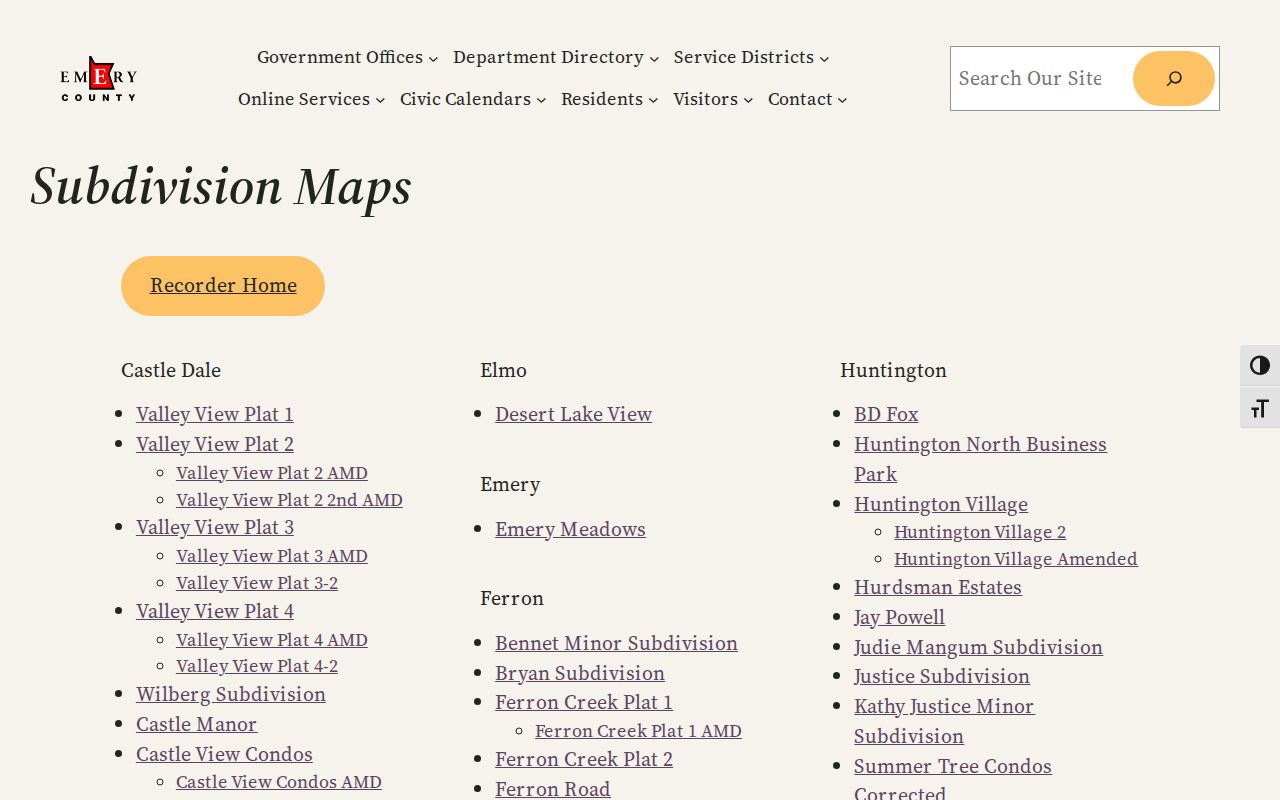
Find the map first using the exact subdivision name. Then ask for the deed instrument affecting the parcel you identified.
How to Trace an Emery County Deed Chain
Emery County publishes no deed-search controls and no index-year range. So step one is a question to the Recorder, not an assumed portal workflow. Give staff the current tax-roll name and parcel serial. Add the subdivision, legal description, approximate date, and any prior party name. Ask which cross-reference index or book applies. Ask whether a plain, certified, scanned, or counter copy is available. If an online result comes back, record the instrument date and parties. Then use the grantee-to-grantor sequence to request the prior transfer.
- Start from the parcel, plat name, and current name shown on the tax roll.
- Ask the Recorder for the deed in which the current owner was grantee.
- Read the grantor and legal description, then request the preceding transfer under that party name.
- Continue by date and legal description; ask about older books or microfilm when the index route ends.
- Book and page
- A volume-and-page locator that may apply to an older record.
- Instrument number
- A document identifier, if the Recorder's record uses one for the item.
- Index versus image
- An index entry helps locate a record; a copy shows the filed document.
Emery County Deed Copy and Recording Fees
A standard document recording costs $45. That covers up to ten legal descriptions. Each additional description is $2. Staff-made copies of recorded documents run 50 cents per page. Copies you make yourself cost 25 cents. Research is $50 plus 50 cents per parcel and any copy or delivery cost. A certified copy is $5 plus 50 cents for each added page. The official subdivision plat copy is $4. Changes under HB-38 took effect May 6, 2026. Verify the current figures before sending money.
Mailed recordings need the original document, payment, and compliance with Utah recording rules. The Recorder requires readable documents. It also requires indexed signer names, an acknowledgment for instruments affecting real property, a short caption, a grantee mailing address, a legal description, and a parcel number when required. E-recording is available through Simplifile. The office will not prepare legal documents. Review the county's requirements before you submit anything.
The Recorder fee schedule lists copy, research, certification, and plat charges.
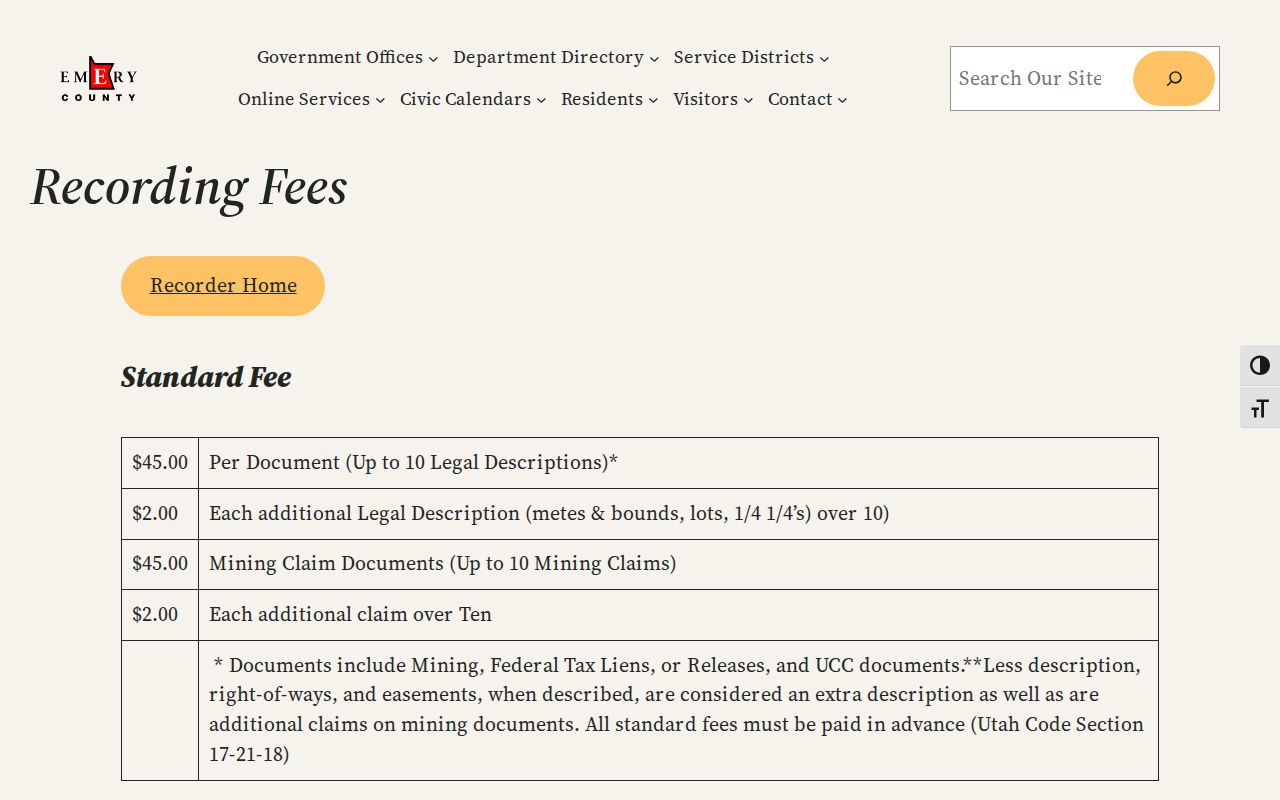
Fee amounts can change, so confirm against the current official schedule before mailing any deed copy or certification request.
Emery County Deeds, Liens, and Court Orders
Plenty of instruments touch an Emery County land record without moving title. A mortgage leaves its mark at the Recorder. So does a mechanic's lien, a federal tax lien, an easement, a right-of-way, or a release. Search each one by legal description and by the named parties. Then read the entry closely: the recording date, the document identifier, the parties, the parcel description, the amount, and any later release. A lien on file proves nothing about payment. Only a satisfaction, reconveyance, termination, or court disposition closes the question.
When a dispute lands in court, Utah Courts Xchange helps with Emery County property litigation. It is the companion source for case detail. Its public case summary can list the parties. It can also list the case number, judge, attorneys, filings, hearings, judgments, and the outcome. District-court documents filed electronically since July 1, 2010 are available for purchase. Free terminals sit in the courthouses and at the State Law Library. Sealed, expunged, and restricted family or juvenile matters stay off the screen. The Utah Courts Xchange overview explains what the service shows and where access stops.
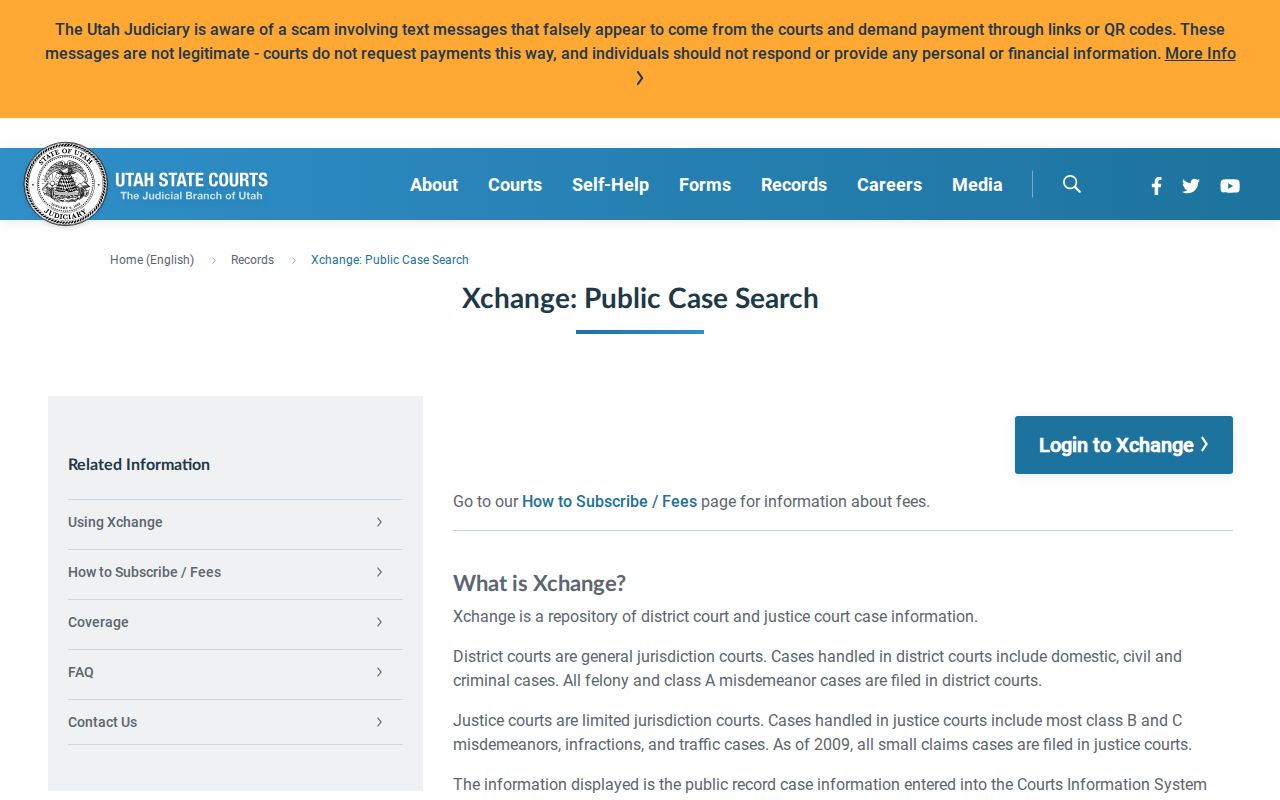
A court file explains the fight. The Recorder's filed instrument still governs what actually sits in the Emery County land record. Open the Xchange public case-search entry to reach the portal shown below.
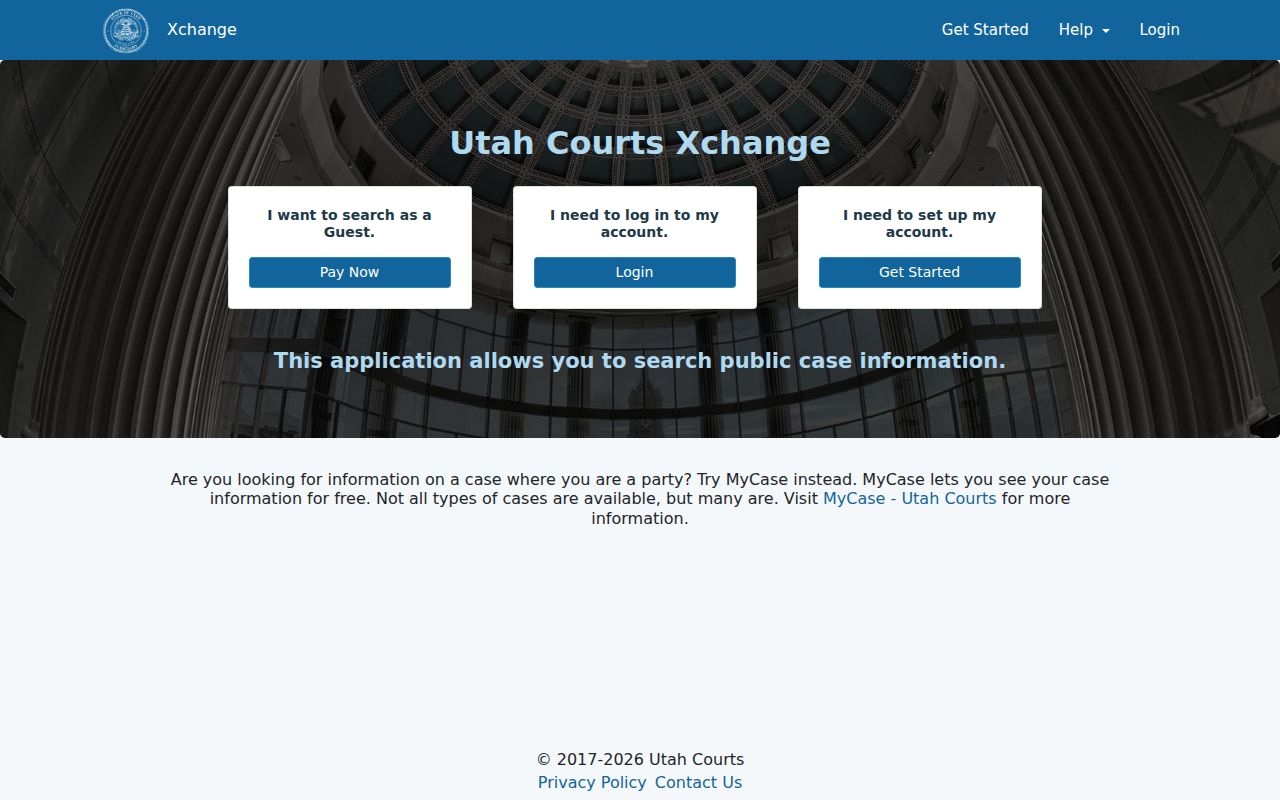
The portal handles public case lookup. Document access and case limits, though, depend on the court record itself and the access rules that govern it.
Utah UCC Search Is a Separate Filing System
Utah's Uniform Commercial Code service is a separate stop. There you can search business financing statements or request a copy of a UCC-11 record. A UCC filing can matter when you are tracing an entity or personal-property collateral tied to an Emery County property. But it is not a deed. It will not surface every interest in real estate. And it cannot stand in for the Recorder's land index. The Utah Division of Corporations and Commercial Code runs the UCC filing and search service.
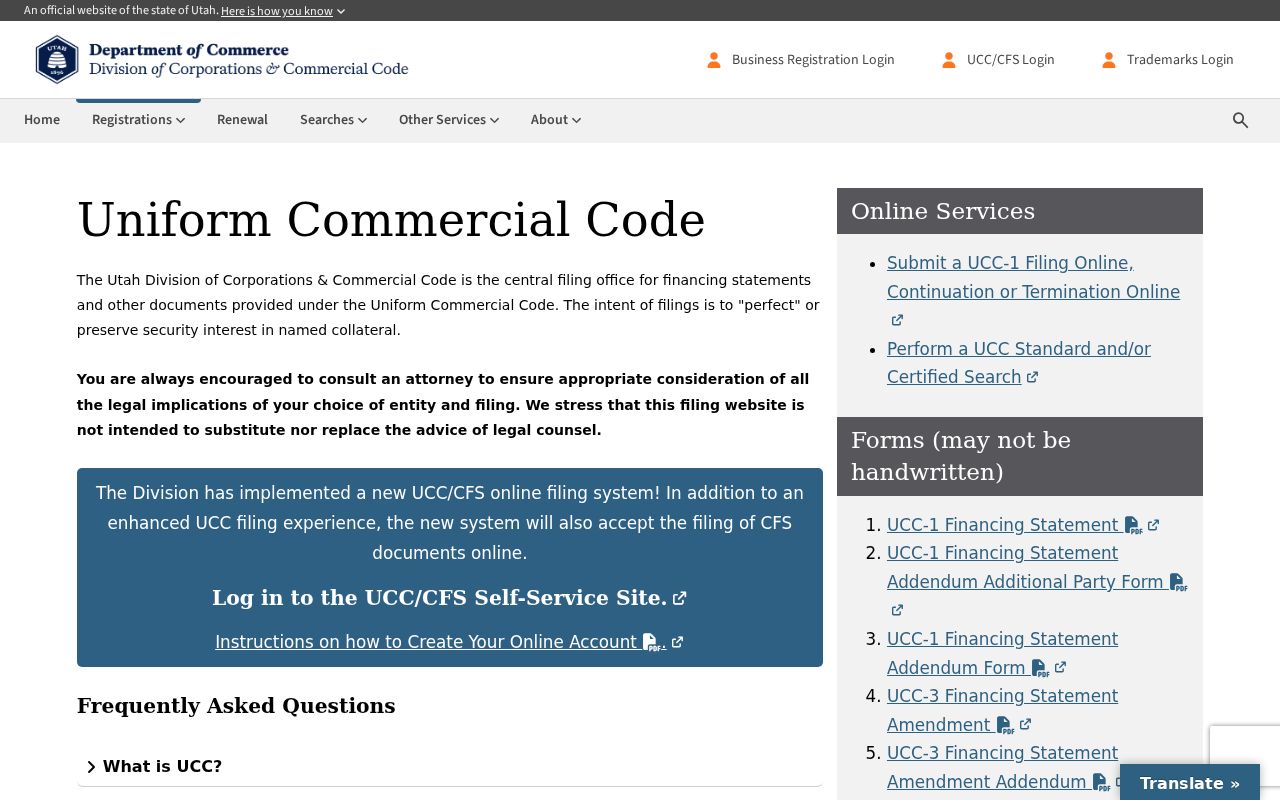
Treat any business filing as one clue among many. Confirm land ownership through the recorded county instruments themselves. Before contacting the Recorder for a copy, the Emery County property search route helps pin down the parcel and the parties. That groundwork makes the request faster.
Older Emery County Land Records
The Recorder's current pages leave the early history vague. They do not state the deed-book run, the online image start, or the scan cutoff. For an older Emery County chain, ask whether the index survives in original books, on microfilm, as scanned images, or on an office terminal. Never plug that gap with a guessed date.
Emery County Archives fills in color. Its Emery County Progress issues run from 1900 to 2001, with some years missing. The paper also sits alongside maps, personal histories, business and town incorporation papers, irrigation ledgers, and family collections. Utah State Archives holds Emery County Clerk birth registers covering 1898 to 1905. A 2026 update expanded that register's name index. Useful as identity clues, none of it replaces a deed index. Digitized Huntington-Cleveland irrigation minutes and Ferron and Molen irrigation material can also explain how local land and water developed. Whatever name, canal, or farm clue you gather, match it back to a parcel. Match it to its recorded legal description too. The State Archives finding aid identifies the birth-register series.
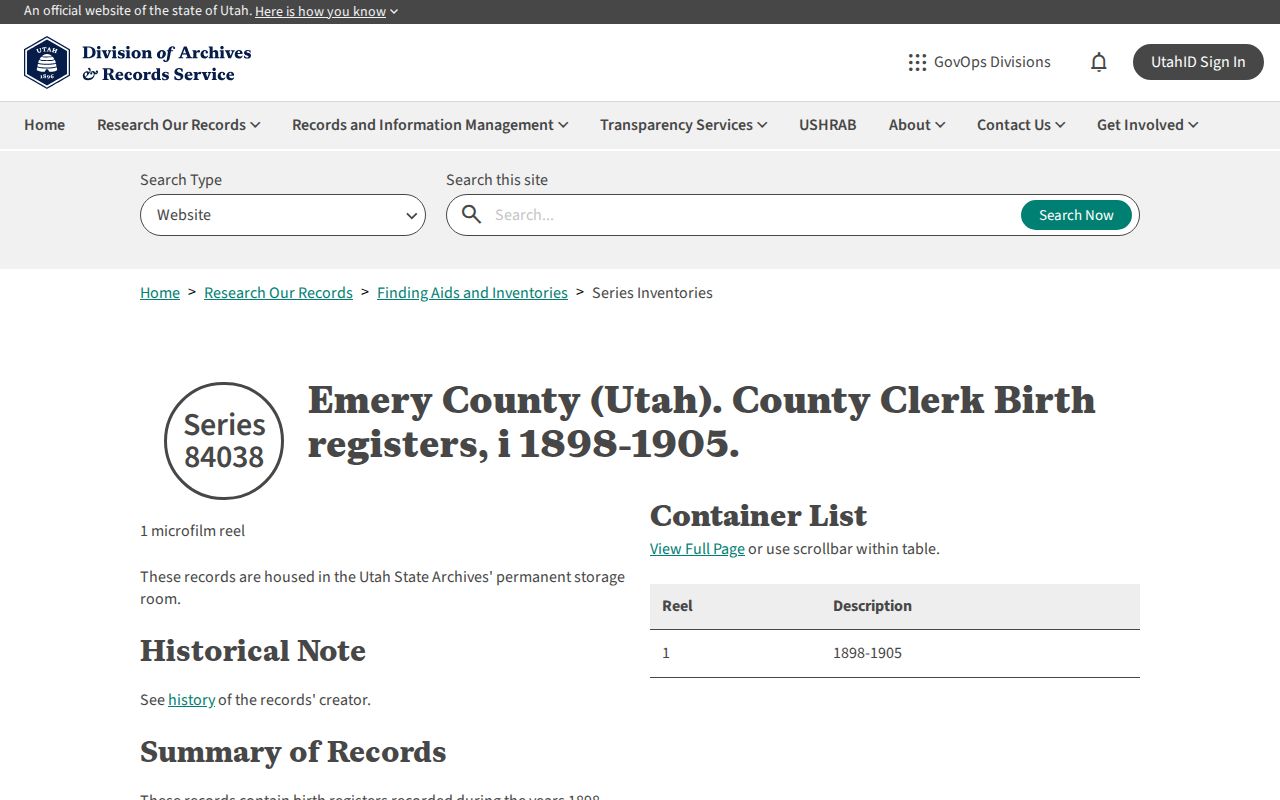
A name or a date from historical sources is a starting point. Only the filed land instrument settles what Emery County recorded.
Requesting an Emery County Deed Copy
A copy request goes smoother with details. Give the parties, the parcel, the instrument type, and an approximate recording date. Say whether you want an uncertified or certified copy. The Recorder sits at 75 East Main Street in Castle Dale, answers (435) 381-3520, and takes email at recorder@emery.utah.gov. Mail goes to P.O. Box 698, Castle Dale, UT 84513. Hours run Monday through Friday, 8:30 a.m. to 5 p.m., closed on county holidays. Ask for a fee estimate and the right index route before sending payment.
Delivery options differ by record type. A deed copy by fax or email carries its own charge, while a plat copy starts with a separate first-page fee, so confirm which schedule applies. Staff will not perform legal research over the phone. Use a call to learn the route, not to settle a title question. When a transaction depends on the document, ask the professional involved whether a certified copy or a separate title search is required.
Recorded, not guaranteed. An Emery County deed copy shows the instrument filed with the Recorder. It does not establish that every interest is recorded or that title is clear; use a title professional for that determination.